What draws you to Chicago’s Gold Coast — the landmark streets, the lake at your doorstep, or a lifestyle that lets you walk to almost everything? If you are weighing this neighborhood against others in the urban core, you likely want both character and convenience. In this guide, you will learn how the Gold Coast’s architecture, lakefront access, shopping and dining, and daily rhythm fit different ways of living, plus a few practical notes on pricing, transit, and parking. Let’s dive in.
Gold Coast at a glance
The Gold Coast sits on the Near North Side just west of Lake Shore Drive and north of the Loop. Many sources describe the historic district as roughly bounded by North Avenue, Lake Shore Drive, Oak or Chicago Avenue, and Clark Street, with some local variation. You can explore a concise district overview in the National Register listing for the Gold Coast Historic District.
Walk a few blocks and you will feel the contrast that defines the area. You have quiet, tree-lined streets with preserved row houses and mansions in one direction, and then vibrant retail and restaurant corridors in another. If you like having a peaceful block but quick access to energy when you want it, this neighborhood is worth a close look.
Architecture that tells a story
Astor Street and Gilded‑Age homes
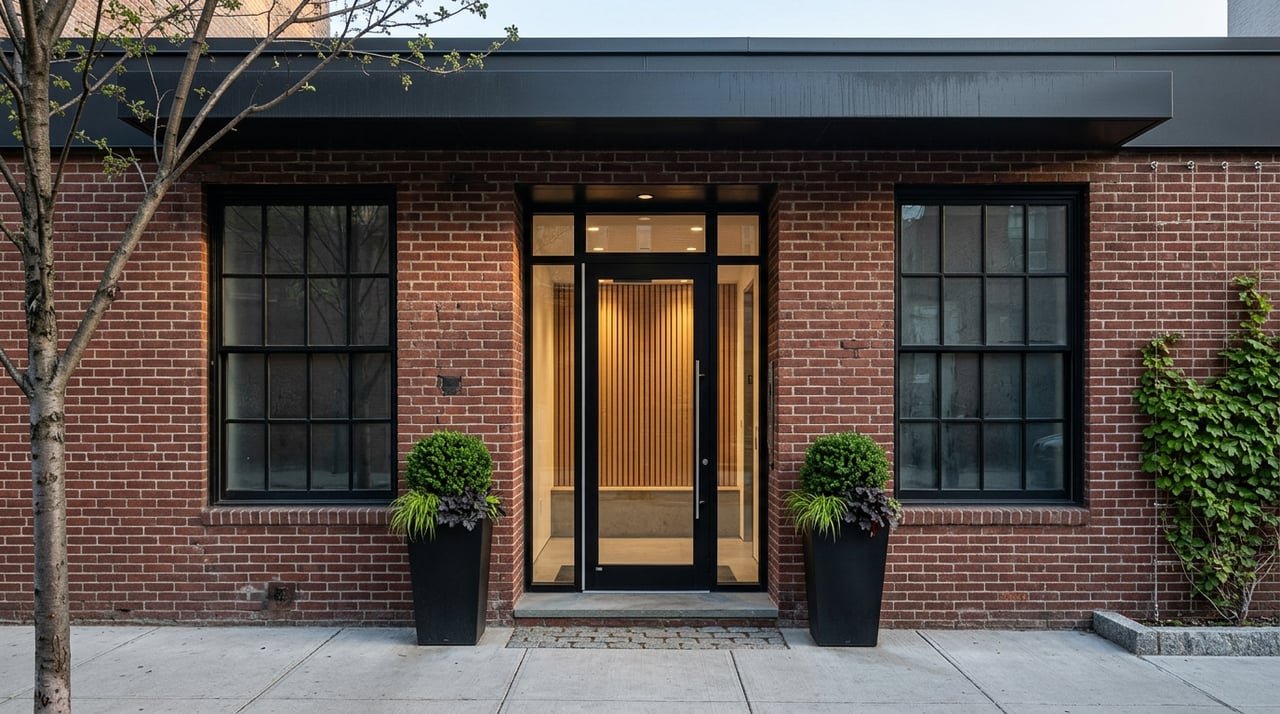
After the Great Chicago Fire, many of the city’s wealthiest residents moved north and helped shape the Gold Coast’s identity. Astor Street and its surrounding blocks hold much of that preserved fabric. You will find historic row houses, townhomes, and mansions that give the neighborhood its distinctive look. The James Charnley House, designed by Louis Sullivan with a young Frank Lloyd Wright’s involvement, is a notable example and offers tours on a limited schedule.
If you value architectural character, this area rewards slow walks and weekend photo strolls. Many properties are protected as part of the historic district, which is why the streetscape feels cohesive and rich with detail.
East Lake Shore Drive and tower living
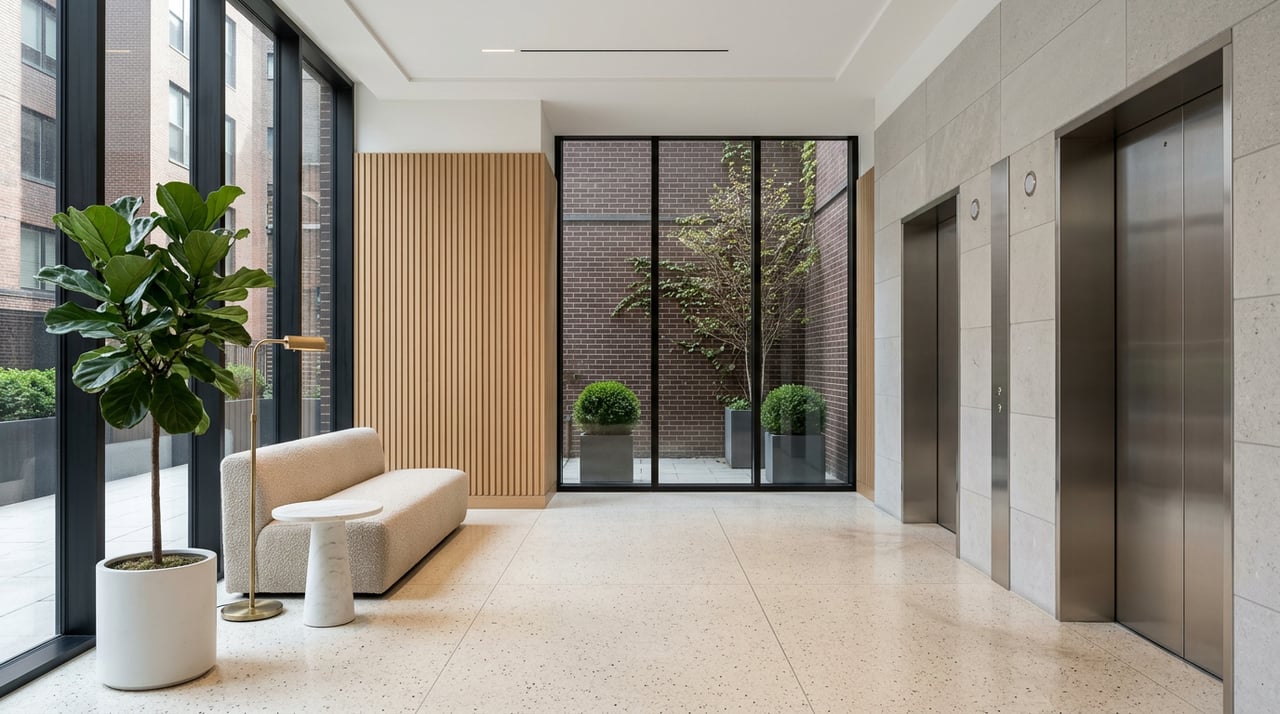
Along the water, the skyline takes over. Luxury high‑rise buildings on East Lake Shore Drive and the Lake Shore Drive corridor trade yard space for wide views and elevator convenience. Expect a condo and co‑op heavy mix, often with 24‑hour door staff, secure garages, fitness rooms, and rooftop decks. Townhomes and converted mansions exist in smaller numbers and tend to command premium prices when available.
If your priority list includes a doorman, on‑site amenities, and a quick elevator ride to Oak Street Beach, the lakefront towers will be on your short list.
Lakefront life in practice
Oak Street Beach and the Lakefront Trail
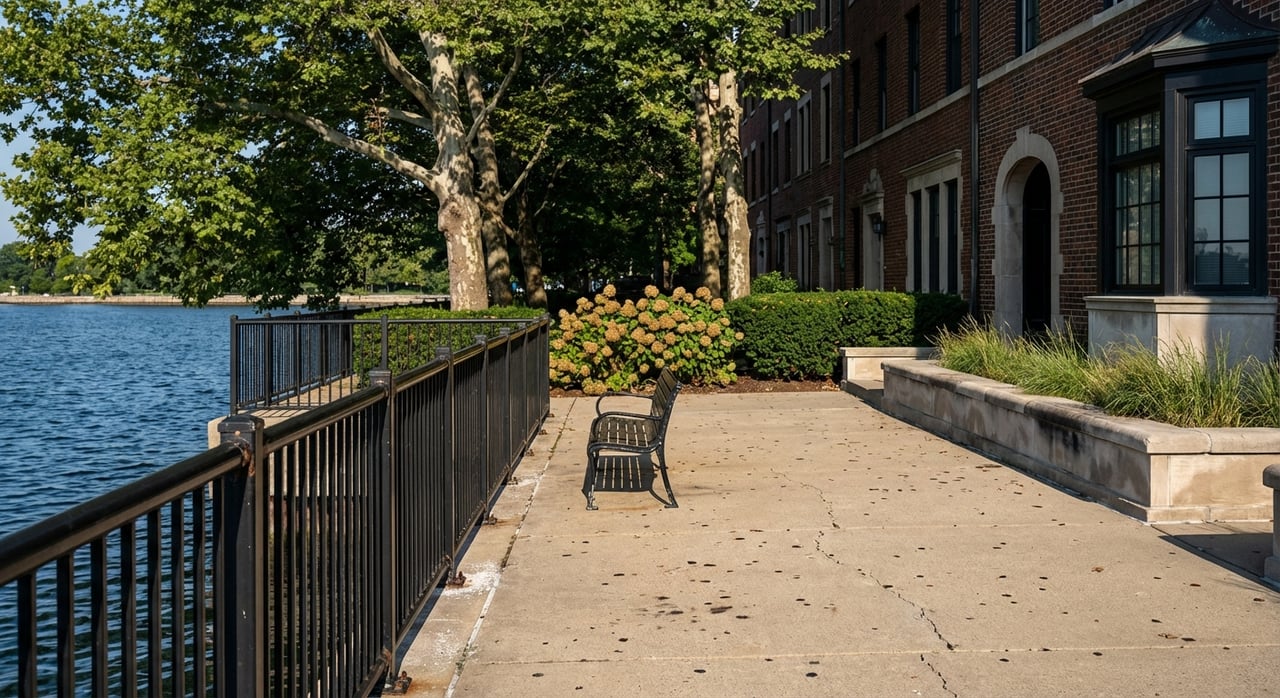
Oak Street Beach is the neighborhood’s signature lakefront asset. It offers a sandy shoreline, seasonal lifeguards, chair and umbrella rentals, and a café, with the Lakefront Trail running beside it for daily runs and bike rides. You can review hours and amenities on the Chicago Park District’s Oak Street Beach page. On summer weekends, it is lively. On weekday mornings, it is a calm start to the day.
Small parks and quiet corners
A few blocks inland, you will find green pockets for reading, dog walks, or a mid‑day break. Washington Square Park, across from the Newberry Library, is a classic spot for a bench and a book. Families often use Goudy Square Playlot for playground time. If you want to scan options citywide, the Park District maintains a playgrounds directory.
Shopping, dining, and culture
Oak Street boutiques and the Mag Mile
Oak Street is known for high‑end boutiques and small luxury retailers, while the Magnificent Mile one block east adds department stores and national brands. If you like browsing and gifting, you will appreciate how close these corridors sit to most residential blocks. For a quick primer on the area’s historic districts that includes Oak Street context, browse this Choose Chicago overview.
Restaurants and nightlife
Rush Street and the blocks near Division bring an active evening scene with bars, steakhouses, and chef‑driven concepts. Restaurants change often, but widely covered spots like Maple & Ash have helped anchor the steakhouse conversation in recent years, as noted by Eater’s coverage of Chicago steakhouses. If you prefer quieter dinners, there are plenty of nearby options along smaller streets and in adjacent neighborhoods.
Cultural anchors
The Newberry Library sits at Washington Square and offers exhibits and events throughout the year. Galleries and museums cluster within walking distance toward the Magnificent Mile and into River North. If you enjoy culture on foot rather than long drives, this area makes it easy to add events to your week.
Daily rhythm and walkability
Life here is very walkable. Grocery options, pharmacies, salons, dry cleaning, and medical offices are close by, and the Lakefront Trail turns a quick break into a workout with a view. Transit is part of the fabric as well, with the Red Line at Clark and Division and multiple bus routes along Michigan Avenue and State Street. For a neighborhood context on vibe and transit use, the University of Chicago’s Chicago Studies neighborhood overview is helpful.
If you prefer not to rely on a car for daily errands, the Gold Coast supports that choice. Still, many households keep a vehicle for weekend trips or longer commutes. If parking is on your list, plan for it up front.
Housing types and pricing logic
The Gold Coast is primarily a condo and co‑op market, with a meaningful share of mid‑century to contemporary towers near the lake and historic low‑rise options inland. That mix is the reason you will see very different numbers across data vendors.
- Zillow’s broad home value index placed the typical Gold Coast value in the low to mid $300Ks as of late 2025.
- Redfin’s late 2025 snapshot showed a median sale price in the low to mid $500Ks.
- Realtor.com’s October 2025 median active listing price was closer to roughly $800K.
These figures measure different things, at different times, across a varied set of homes. Use them as ranges to frame expectations, then match them to specific buildings and floor plans. If you are comparing a renovated high floor with lake views to a first‑floor walk‑up, the pricing logic will diverge. Co‑ops also introduce variables like underwriting and monthly assessments that can change your monthly picture.
Commute and transit notes
Many residents commute to the Loop by rail or bus, while others walk or bike along the Lakefront Trail. Expect trip times to vary by time of day. If a predictable commute is key, test your route during your typical hours. The Clark and Division Red Line stop, plus frequent north‑south bus lines near Oak Street and Michigan Avenue, cover most needs for downtown connectivity.
Schools and education
Gold Coast addresses fall within Chicago Public Schools boundaries, with specific schools varying by block. Ogden International serves parts of the Near North and is a common point of research for families. You can confirm the campus location using MapQuest’s Ogden International listing. The Latin School is a long‑established private K–12 option in the neighborhood. If schools are a priority, review CPS boundary maps and private admissions timelines early in your search.
Parking and car costs
Street parking is limited and tends to be competitive at peak times. Many residents rely on building garages or neighborhood lots. As a budgeting guide, monthly garage passes in central Chicago commonly range from about $165 to $410 per month in 2026 estimates, with higher daily rates near downtown. You can review current market ranges in this parking cost overview. If you plan to keep a car, include garage rent or condo parking assessments in your monthly math.
Who the Gold Coast fits
Consider the Gold Coast if you want:
- Lake access within a short walk for workouts or relaxation.
- An architectural mix that blends historic blocks with modern towers.
- Walkable errands, strong shopping and dining, and quick access to downtown.
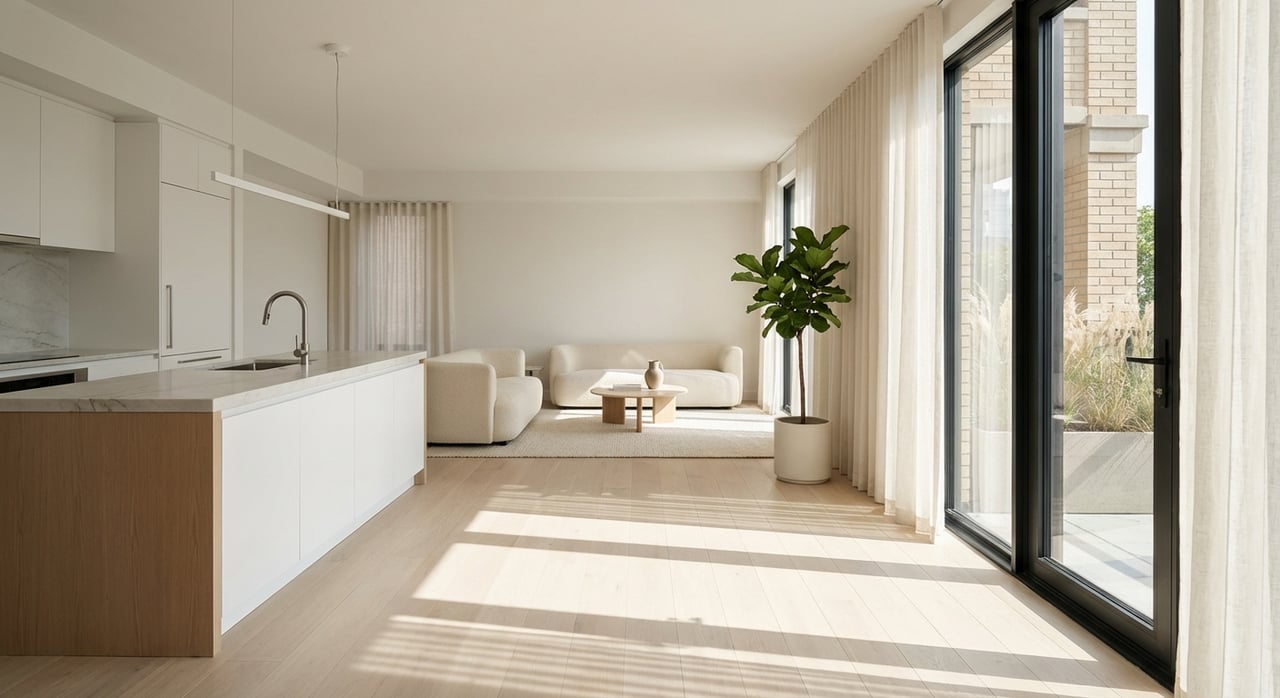
- Condo or co‑op living with door staff and amenities, or a rare historic townhome.
You may want to look elsewhere if you prefer:
- Larger private yards or lower‑density streets as your top priority.
- Abundant street parking at all times.
- A quieter nightlife footprint on your immediate block. In that case, focus on the more residential pockets west of Lake Shore Drive and away from Rush and Division.
How to pick your block and building
Use this quick, practical framework when you tour:
- Test the noise. Visit your block at 7 a.m., noon, and 10 p.m., plus a weekend night near Rush and Division if you are sensitive to sound.
- Walk your daily life. Map your grocery, pharmacy, transit stop, dry cleaner, and a favorite café. Time the walk.
- Stand in the lobby. Do you value door staff presence, package handling, and security measures, or would you trade them for lower assessments?
- Read the documents. For condos and co‑ops, review budgets, reserves, rules, and upcoming projects. Look for special assessments and elevator or facade work.
- Check the lake. If views or the Lakefront Trail are part of your must‑have list, verify the exact view corridor and path access.
- Plan for parking. If you need a car, price your monthly garage or on‑site parking now, not after you fall in love with the unit.
A balanced take
The Gold Coast offers a rare combination of historic charm, lakefront access, and big‑city convenience. Your experience will depend on the exact block and building. If you want quiet, lean into the tree‑lined streets west of the lakefront towers and the Astor Street area. If you want energy and an amenity‑forward building, the East Lake Shore Drive corridor and nearby towers deliver that with views.
If you want a data‑informed, low‑stress process to find the right fit, let’s connect. I bring a contracts‑first, strategy‑driven approach to help you evaluate buildings, read the financials, and get clear on trade‑offs before you write an offer. Start with a quick conversation and I will tailor a plan to your goals.
Ready to explore the Gold Coast by building and block? Let’s set up a tour plan and a saved search that fits how you live. Reach out to Georgia Litle to schedule a free consultation.
FAQs
What are the Gold Coast’s boundaries?
- Many sources describe the historic district as roughly North Avenue to the north, Lake Shore Drive to the east, Oak or Chicago Avenue to the south, and Clark Street to the west. See the Gold Coast Historic District overview for context.
How close is Oak Street Beach and the Lakefront Trail?
- Oak Street Beach sits at 1000 N. Lake Shore Drive, with the Lakefront Trail running beside it for daily runs, rides, and walks. View amenities and hours on the Chicago Park District page.
Is the Gold Coast good for families?
- Yes if you value walkable amenities, small parks like Washington Square Park, nearby playgrounds, and access to public and private school options. Larger private yards are less common than in more residential neighborhoods.
What is the nightlife and noise level like?
- It varies by block. Astor Street and nearby residential pockets are often calmer, while the Rush and Division corridor and Oak Street retail blocks can be busy and louder at night and on weekends. Visit at multiple times to gauge fit.
Do I need a car to live in the Gold Coast?
- Many residents handle errands and commutes by walking, transit, or ride‑share. If you keep a car, plan for building or garage parking and budget about $165 to $410 per month based on current market ranges, as outlined in this parking cost resource.
Are historic mansions open to visitors?
- A few, like the James Charnley House, offer tours on limited schedules, while many others are private residences or have been converted to condos. Always confirm hours before you go.